

DISCOVER
Wellness
&
Resliency

Immunize Yourself Against Burnout!
Try these simple strategies today!
Ah, stress… there seems to be plenty around these days! Yet, it's only a problem when we don't allow ourselves to recover. Without recovery, chronic stress may lead to burnout. Read on to find out how you can prevent burnout and manage stress.
Stress and Recovery
Ah, stress… there seems to be plenty around these days! Yet, it's only a problem when we don't allow ourselves to recover. Think about it: stress is good if you are being chased by a tiger or trying to meet a deadline. It helps you focus, gets your muscles ready to move and creates many other changes that help your body to deal with the challenge. Tiger gone? Met the deadline? Great! Now you can relax and wait until the next time you need to jump into action. Your muscles relax, heart rate and blood pressure come down, your digestion kicks in, and you are in recovery mode or "rest and digest." So why are so many of us having such a challenge with stress if it's not "so bad"? The reason is we are missing the recovery period. Think of the analogy of an elite athlete: they train hard and stress their body a lot to reach that peak potential. But any elite athlete will also tell you their recovery periods are just, if not more, essential for their overall performance. If they miss recovery time? Well, then, poor performance, injury and illness take over. So recovery is vital!
Burnout

I’ve been fortunate to coach many clients across many professional sectors. One of the main challenges I notice is not recognizing the importance to recharge, recover and re-energize every day, every week, and every month. Just like those elite athletes, we need to recover from the day-to-day stress and the havoc it causes on our bodies, minds, and emotions. In fact, it's vital to prevent burnout.
Burnout is defined most simply as a combination of 3 symptoms: feeling exhausted, cynical, and incompetent.
3M Framework to Prevent Burnout

So how do you go about fitting in recovery? I recently learned of a great framework called the 3M framework through my favourite meditation app, Headspace. The 3M framework is a way to think of when to schedule in those recovery periods. It goes like this: to prevent burnout you need three types of breaks :
MACRO breaks - a half a day or a full day once a month,
MESO breaks -1 to 2 hours a week and
MICRO breaks - daily moments scattered throughout the day.
Yet, I often observe that many don't realize the need to schedule time for all three types of breaks. It's very much like planning car maintenance and not waiting until the car breaks down to do something. It may seem like, "I'm overwhelmed and don't have time!" I think you would also agree that you don't have "time' to be seriously ill either! It's more important to recognize that these recovery pauses actually help us be more productive and efficient in the long run.
Schedule in Recovery
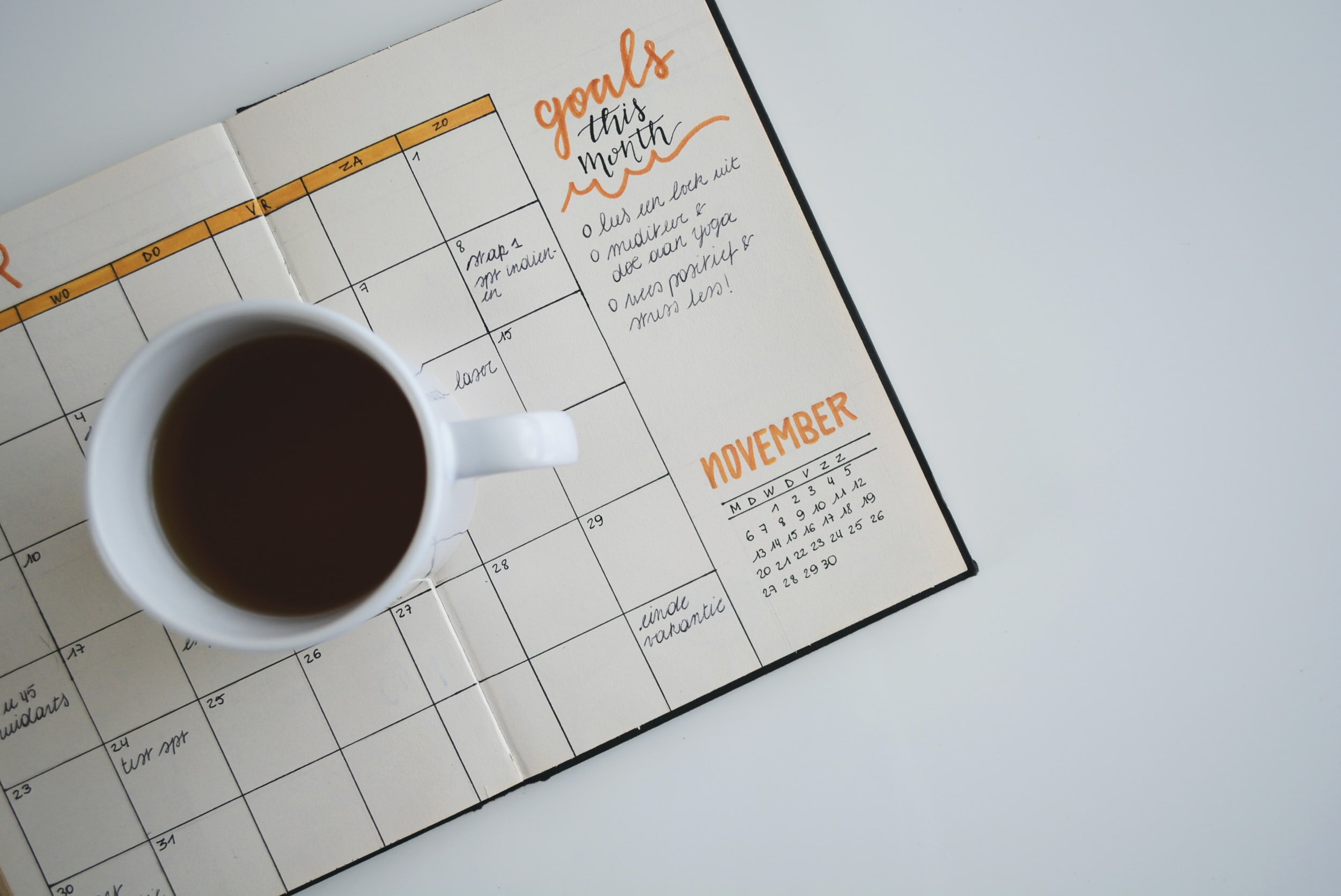
Let's begin!
Step 1. Look at your calendar a month ahead and pick a day to spend half a day or a full day doing something fun. Fun is the keyword here. It's essential to recognize that when you're taking these breaks each week and each month that you're doing something to really let yourself unwind and have some fun. This could be spending the day with friends or family hiking and then enjoying a picnic meal or practising a hobby. Recently I've been scheduling golf and dinner with some friends of mine. There's definitely a lot of laughter. If you saw me golfing, you'd understand!
Step 2. Weekly, schedule in 1-2 hours to recharge. Think of something that really lets you detach from any work or responsibilities. My husband and I like to take an hour or two on the weekend and go cycling or play tennis. This helps us get in some physical activity and enjoy the outdoors, which research has also shown brings so much benefit to our overall health. This is especially true when we are used to working all day indoors.
Step 3. Finally, we have daily breaks. With my clients, I've developed a framework for this called 3X3. 3X3's help clients remember to fit micro breaks in three times a day and bring in a component that recharges their mind, heart (emotional centre), and body. The work of B.J Fogg, James Clear, and others on habit-forming shows that it's best to start with something small that you can attach to something else to create these habits.

The Daily 3x3
So how do these 3X3's work? First, pick three times a day to incorporate a break, adding it before or after an activity you already do. For example, you can choose before or after eating breakfast, lunch and dinner. Next, at the scheduled time, take three minutes, (yes, even three minutes will make a difference) to do the following:
1 minute doing something to recharge the mind, maybe some mindful breathing.
1 minute to do something to recharge the body: how about some stretching or a quick one-minute walk. Your body likes to move!
1 minute to recharge your heart or emotional centre. This is where the science of positive psychology (happiness) comes in. Research in the field of positive psychology shows that creating positive emotions is a practice which increases overall wellbeing. It's something that needs to be practiced consistently and daily. So this is your chance to take a minute to think about something you really appreciate or, my favourite, is to ask myself, "what's going well so far?" This turns the focus on the positive and not on what is already so stressful.
The 3 x 3 simply means taking three minutes three times a day to focus on your mind, emotions, and body and help them recover. It helps to pull the plug on the build-up of stress and helps to immunize you from burnout.

These strategies may seem simple and small, yet they have a powerful impact when you practice them consistently. Remember that old analogy of the oxygen mask on an airplane: you need to put it on yourself first to be helpful to those around you. Good luck with these, and let me know how it goes!
Know someone who could use a bit of stress relief? Share this post and spread some joy! ☺️
Disclaimer: The content in this blog is not intended to constitute or be a substitute for professional medical advice, diagnosis, or treatment. Always seek the advice of your doctor or other qualified health care provider with any questions you may have regarding a medical condition. Never disregard professional medical advice or delay in seeking it because of something you have read in this blog or on this website.

RELATIONSHIPS
HOW TO KEEP THEM HEALTHY
Many situations challenge relationships and COVID has to be way up there among them. Need some strategies to keep your relationships healthy? Read on!
How to Keep Them Healthy

From work colleagues to families and neighbours to friends, we all need to learn to manage relationships well. Many situations challenge relationships, and COVID has to be way up there among them. Notice any signs of strain in your relationships in the past year? From his extensive work on relationships, psychologist and researcher John Gottman (The Seven Principles for Making Marriage Work) points out that four key signs show your relationship is in trouble. He calls these the "4 Horseman of the Apocalypse." They are: criticism, contempt, defensiveness, and stonewalling. If you notice any of these signs, this video will give you a little more on strategies to counter them. Although Gottman's work is primarily on couples; I think the lessons are universal to all relationships. How we treat one person is likely how we treat everyone because so many of our actions are habitual.
THE EMOTIONAL BANK ACCOUNT

What habits do we need to build to prevent our relationships from inviting in those "4 Horseman" in the first place? One of Gottman's fundamental principles is to have a 5:1 ratio of positive to negative interactions, especially during an argument. 😉 The idea is to build a "savings account" of your positive actions in your "relationship bank" so that when you make a "withdrawal" by behaving negatively, there is a buffer. This idea is similar to Stephen Covey's work (The 7 Habits of Highly Effective Families) with the emotional bank account. Covey defines that actions that build trust add to the account and actions that deplete trust withdraw from the account. The balance of the account then determines how people interact with each other. So, if your interactions are on the bumpy side, you may want to work on adding more "deposits" to the emotional bank account of that relationship.

POSITIVE REALTIONSHIP DEPOSTIS
Developing these habits, however, requires some intention. We need to decide that we will make some positive deposits each day by thinking of the interaction coming up and how we will make that interaction more positive. How do we add those deposits? As you may have already guessed, some emotional bank account deposits include:
Showing simple kindness such as making a cup of tea without being asked
Showing gratitude for something the other has done,
Stopping and listening with full presence to what the other is saying (put the phone down!),
Asking about their day with genuine interest,
Spending time doing fun activities together (movie, concert, playing games),
Learning about their likes and dislikes and keeping these in mind.
ACTIVE CONSTURCTIVE RESPONSING

Of course, there are many more! Another way to make a positive deposit is called active constructive responding (ACR). ACR is about turning towards or paying full attention to the person when they come to share something good with you, such as a joke or how their day went. By responding positively, you magnify the positive experience, build trust and intimacy, and contribute to your well-being. If you ignore or dismiss the exchange, you do the opposite, creating a withdrawal from their emotional bank account.
Relationships, just like your personal bank account, need regular tending for positive results.
Challenge:
How are you going to contribute to the emotional bank accounts in your relationships? Take some time this week and reflect at the end of each day what you did to "deposit' or "withdraw" from those emotional bank accounts. Then, decide what steps you will take the next day to put in a few more "deposits." 😉
Disclaimer: The content in this blog is not intended to constitute or be a substitute for professional medical advice, diagnosis, or treatment. Always seek the advice of your doctor or other qualified health care provider with any questions you may have regarding a medical condition. Never disregard professional medical advice or delay in seeking it because of something you have read in this blog or on this website.
Share this post and spread some joy! ☺️

THE POWER OF HAPPINESS
WHAT IF YOU COULD SPREAD HAPPINESS?
Turns out that happy people create more happy people, according to the Framingham Heart Study. Find out how powerful happiness is and ways to cultivate it in the blog below!
WHAT IF YOU COULD SPREAD HAPPINESS?

Turns out that happy people create more happy people, according to the Framingham Heart Study. This was a study that was started in 1948, initially to follow a group of people to look at heart disease. Over time they followed the second and third generations of the initial study group and have expanded to look at other factors and influences of health. Their results show that happiness is contagious to 3 degrees. So if you are happy, then your friend, their friend and their friend’s friend are more likely to be happy. In other words, your happiness has a ripple effect through your social network! Although we don’t really know how this works, there are many theories such as happy people treat others better or even a psychoneuroimmunological (say that 10 times fast!) change. A psychoneuroimmunological change just means the chemicals and hormones in your body might change. There are some limits, such as the distance we are from one another. However, someone who is happy will increase the chance of their friend becoming happy by 25%!
SHOW SOME KINDNESS AND SPREAD THE HAPPY
Hmmm. Well, we have heard it before: “obesity is contagious”, “smoking is contagious.” Parents have also heard that kids will do “as they see” and not “as they are told.” To me, that just shows the influence we have over people who are near to us. By working on our own health and wellbeing, we can have a ripple effect within our society. It’s also important to remember that this doesn’t mean we only focus on ourselves. Studies have also shown that acts of kindness boost our well-being while helping the recipient as well.
So, what will you do to SPREAD SOME HAPPINESS today?

HAPPINESS BOOSTING PRACTICES:
Try a little gratitude to boost your wellbeing! it!
Feel better with square breathing in just minutes!
Try this loving-kindness meditation to boost your happiness today
OTHER LINKS
Disclaimer: The content in this blog is not intended to constitute or be a substitute for professional medical advice, diagnosis, or treatment. Always seek the advice of your doctor or other qualified health care provider with any questions you may have regarding a medical condition. Never disregard professional medical advice or delay in seeking it because of something you have read in this blog or on this website.