

DISCOVER
Wellness
&
Resliency

How to Handle a Rough Day
The other day I had a really rough day. But I had a student that I was teaching and I made sure that they received the most out of each situation: all the teachable moments, all the pearls from each case. In medicine, and I’m sure in many work situations, you think you have to look like you have everything under control and nothing can phase you. At the end of the day I realized that I had forgotten to teach the most important lesson: how to deal with the rough day!
The other day I had a really rough day. But I also had a medical student that I was teaching and I wanted to make sure that they were learning from each situation regardless of my own emotions. I made an effort to take advantage of each teachable moment so that my student had the most beneficial experience. In medicine, and I’m sure in many other work situations, you think you have to appear you have everything under control and nothing can phase you. At the end of the day I realized that I had forgotten to teach the most important lesson: how to deal with the rough day!
We all have them. Sometimes it feels like every interaction is challenging. It might feel like everything that can go wrong does go wrong. It can seem quite overwhelming. So how do you deal with such a day? Here are my tips and how I dealt with my day.
Acknowledge that it’s been a rough day and know that you are not alone. We ALL experience these kinds of days. It’s part of being human. Then, take a moment to bring your hand to your heart (if it doesn’t feel weird - Ok even if it does, just do it- there’s much to be said about the mind-body connection) and say to yourself: “May I be strong. May I be kind to myself.“ Remind yourself that you did the best you could. There is great science behind the benefits of self-compassion and on a tough day, we need to be our own friend (inspired by Kristin Neff).
Breathe deeply for one minute. Repeat often. Whenever I could, I snuck in a minute of just breathing deeply and calmly and reminding myself that, right now, I am OK.
Get some fresh air and go for a walk as soon as you can. There is something amazing about being out in nature and the calming effects it brings. I took quick walk in the quiet, snowy evening.
Find someone to talk to. It doesn’t have to be anyone who will “solve the problem” just someone who will listen. I talked to my husband and my daughter. 🥰
Sit with the pain/ anger/frustration/sadness - not the story just the EMOTION, for 90 seconds and notice how that takes the sting away. Repeat often. This is magic. ✨
Look for things in your life for which you are grateful. There is always something you can appreciate. I appreciated leftovers for dinner so I didn’t have to cook & a warm cup of tea my daughter made for me. 💕
Watch a funny video or show. Laughter is a great way to lift mood. I know you’re thinking of a good video right now!😁
Take care of yourself. What can you do to nurture yourself? For me that meant a warm shower, then curling up with a good book and letting family handle the cleanup after dinner.
Journal - I wrote this! But write whatever comes to you. It’s amazing how this lightens the load and may shed a different perspective. Assume life is happening FOR you and not to you. What’s the lesson in this day?
Know that tomorrow is a fresh start. Life is about progress, not perfection. You cannot change the past but you can choose your next step. That is where the power lies! 🤜🏼
Know someone who’s had a rough day? Pass this on!
Disclaimer: The content in this blog is not intended to constitute or be a substitute for professional medical advice, diagnosis, or treatment. Always seek the advice of your doctor or other qualified health care provider with any questions you may have regarding a medical condition. Never disregard professional medical advice or delay in seeking it because of something you have read in this blog or on this website.

Mindfulness Made Simple
Mindfulness
Our minds are so busy wondering with worry and anxiety about the future or anger and resentment about the past. In fact, research conducted by Matt Killingsworth in his Track Your Happiness project, (where he’s collected over 650,000 responses from people about how they are feeling, what they were doing and about their mind wandering; using cellphones), showed that our mind wanders about 47% of the time! His project also showed that when our minds wander, we tend to be less happy and that it was the mind-wandering itself that led to unhappy feelings. So then, it would make sense that practicing being present and focused on the task at hand would help increase our happiness. But how do we do that? Enter: Mindfulness.
Mindfulness
Our minds are so busy wondering with worry and anxiety about the future or anger and resentment about the past. In fact, research conducted by Matt Killingsworth in his Track Your Happiness project, (where he’s collected over 650,000 responses from people about how they are feeling, what they were doing and about their mind wandering; using cellphones), showed that our mind wanders about 47% of the time! His project also showed that when our minds wander, we tend to be less happy and that it was the mind-wandering itself that led to unhappy feelings. So then, it would make sense that practicing being present and focused on the task at hand would help increase our happiness. But how do we do that? Enter: Mindfulness.
What it IS

Mindfulness is the nonjudgmental awareness of the present moment: noticing what is happening within us (feelings, thoughts emotions sensations) and what is happening around us in our environment. That means not thinking about our past regrets or frustrations and not being caught up in the worry, anxiety and fear of the future. We are present right here, right now; experiencing this moment for all that it encompasses. We are taking in the good, the bad, the happy, the sad without judgement and just letting those emotions and thoughts sit with us. It is difficult to explain mindfulness because everyone will experience it differently. The best way to know it then is to experience it
So mindfulness is a practice of awareness of being in this moment and not judging or evaluating it or taking snaps shots for Instagram! And with that awareness, you may begin to have many insights about your life, that may then lead you to make different choices. In other words, it prevents us from reacting and allows us to respond to the situation with more calmness and clarity. That is the power of mindfulness.
In its formal practice, it is a form of meditation. (There are many forms of meditation.) Often meditation, mindfulness and awareness might be used interchangeably. We can all cultivate this skill of mindful awareness.
What it’s NOT

Stress is caused by being 'here' but wanting to be ‘there’. - Eckhart Tolle
It’s not a religion. It's not “tuning out.” It’s not going to make us self-centred. Instead, it allows us to know our true self better and hold that non-judgemental space for those with whom we interact.
It also doesn’t mean we are resigned to how life is and cannot act upon it. Instead, it gives us power from being aware of “what is” to then choosing our next response instead of reacting. So, for example, imagine waiting in line at the grocery store. We are in a hurry, and the person ahead of us now has all these items that need price checking. Instead of stewing there in anger and wanting the line to move faster (because its not going to, no matter how angry we get), we could become aware, without judging or getting carried away with how there are never enough cashiers. We could notice that we are stressed, frustrated, angry, tense, shooting darts at the person in front of us AND that this is the situation right now. Then we end up with the space to realize: I could listen to that podcast I’ve been meaning to listen to, or I could practice the mindfulness breathing now. We may even notice: "Hey look! Cashier number 8 is free!" By doing this, our body also goes from stress mode to relaxation mode, and this is good! But if we had just stewed and fumed about the situation, wanting it to be different, we likely wouldn’t have come up with any of those choices to improve the situation.
Jon Kabat-Zinn was one of the pioneers who brought mindfulness to North America. With a Ph.D. in Molecular Biology from MIT, he understood that to bring part of an eastern tradition to the west and allow people to see its benefits, required some scientific convincing. So he created the secular version of the eastern tradition that could be studied reproducibly. This is how the Mindfulness-Based Stress Reduction (MBSR) program came about in 1979. He established the Centre for Mindfulness in Medicine, Healthcare and Society at the University of Massachusetts Medical School and spearheaded much of the research in this field of mindfulness. Hundreds of studies and multiple elite university centres later, we now have evidence of the benefits of this practice to overall health and wellbeing.
How To Practice It

Formal practice
Formal practices involve scheduling a time and place for meditation (such as breath meditation, body scan or walking meditation) or mindful movement practices such as yoga, tai chi or qigong. Think of a time in your day when you can set aside even just 5 -10 minutes for formal practice. Research shows that the benefits of mindfulness are best observed with daily practice. Just doing a few minutes is beneficial. Try this Qigong practice today!
Informal practice
Informal practices can be many things from focusing on the steps we take as we walk, to taking in the scenery, sites and sounds around us when we are in nature and so on. It just means bringing the awareness to what we are doing in the present moment. And it can be in “bite-size” moments that last a few seconds to a few minutes or however long you like. Below is a list of what I call “Mindful Moments” Try these practices or come up with your own. The idea is to sprinkle your day with these moments of awareness.

Mindful Shower
When you take your morning shower, be really present. Engage all the senses and feel the water, smell the soap, feel the suds listen to the sound around you. “Know” you are in the shower instead of working on your to-do list for the day or rehearsing for your presentation.
Grounding practice
Before going into your next meeting, seeing your next client, making that next phone call, or even before entering your home at the end of the day, take 1 minute to place your hands on your abdomen and focus on your breath. Notice how your breath feels in your body, without changing it or judging or labelling it. Just notice it. It will improve your interaction and bring you to a calmer mindset.
Mindful eating
Take at least the first bite of each meal mindfully, engaging all your senses. See all the colours and textures. Smell the fragrance of spices and herbs. Feel the textures, and tastes as you take your first mouthful. Notice what goes on in your body as you chew that first bite allowing it to linger in your mouth before swallowing.
What It Does
The science behind mindfulness (and there is a lot of it!) has shown benefit in many areas. However, when practicing mindfulness, the idea is not to get to some type of “goal.” The idea is to allow the practice itself to be the “goal.” However, it is often easier to be convinced to try something when you know the benefits!

Mindfulness benefits:
Promote coping
May Increase positive emotions
Reduce depression and anxiety
Reduce stress,
Help manage pain,
Improve psoriasis (seen in some of Jon Kabat-Zinn’s early research)
Boost the immune system
Increase telomerase activity (related to our DNA) which may be linked to longevity
Change our gene expression (that is which of our genes are expressed or not!)
Change how our brains look and function (seen in imaging studies using techniques such as MRI to view brains before and after a period of meditation) including areas for memory and emotional regulation allowing us to:
respond better to stress
improve working memory
be more self-aware
be more attentive
be more resilient
be more empathetic, kind and optimistic, compassionate
Phew! In other words, mindfulness may help us to recover from stress quicker, improve our interactions with others and be healthier and be happier! So what are you waiting for?
Know someone who could use a bit of stress relief? Share this post and spread some joy.😊
Disclaimer: The content in this blog is not intended to constitute or be a substitute for professional medical advice, diagnosis, or treatment. Always seek the advice of your doctor or other qualified health care provider with any questions you may have regarding a medical condition. Never disregard professional medical advice or delay in seeking it because of something you have read in this blog or on this website.
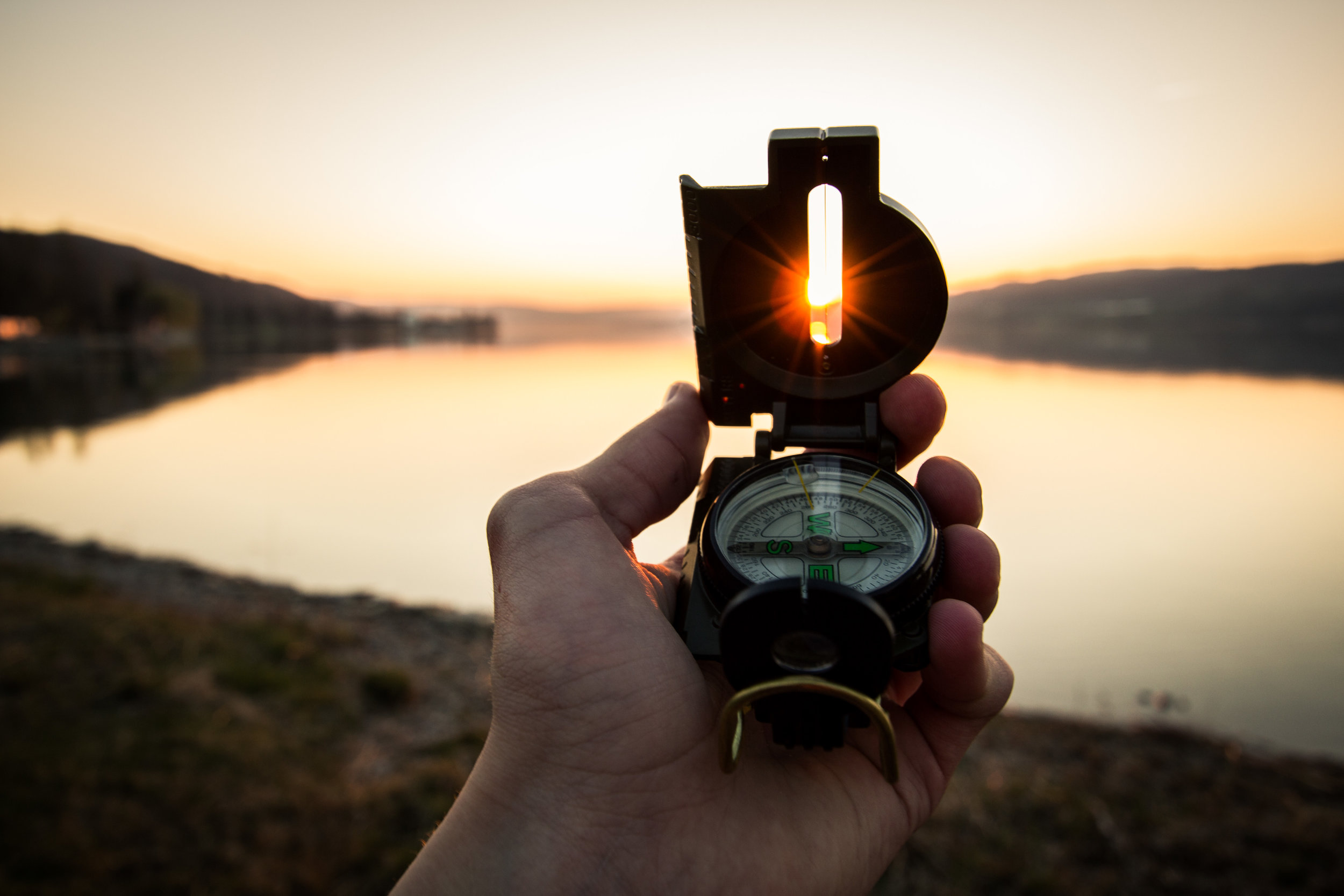
2019: How to Follow Your Compass
Where is Your Compass Pointing?
Have you ever noticed that when you are driving a car, you tend to steer towards what you are focusing on? Hence, the importance of ‘look at where you want to go.’ Well, this happens in life too. Most of us tend to look at what we don’t want in life and especially at the beginning of the New Year:
Where is Your Compass Pointing?
Have you ever noticed that when you are driving a car, you tend to steer towards what you are focusing on? Hence, the importance of ‘look at where you want to go.’ Well, this happens in life too. Most of us tend to look at what we don’t want in life and especially at the beginning of the New Year:
“I don’t want this debt.”
“I never exercise enough.”
“I wish I didn’t have these aches and pains.”
What you focus on, however, acts as a compass. So if you focus on the negative aspects, you steer your life in the direction of what you don’t have. Another simple example of this concept is often seen in sports. Let’s take golf for instance. Golfers will tell you that if you focus on not wanting to hit your ball into the water or the trees, that’s precisely where the ball will go. Instead, you need to focus on hitting the ball toward your target
Checking Your Compass?

Take a few minutes to think about what you tend to focus on most days. It won't be hard because these are the thoughts that occupy our mind most often. And then take a look at the past year. Did it represent what you were thinking of most often? In other words, if you are always worried about your job and how much you dislike it, did things at work change for the better? Did you get any new opportunities or make any connections that might steer you toward a change? Most often we don’t see positive changes when we focus on what we don’t like.
Deciding Where you want to be
So why not take some time to set your compass to what you want for 2019? Don’t focus on how it will happen or when it will happen, just what you want. And every time you feel the stress of not having something, re-visit your vision. The more you think about what you want, the more likely you will see opportunities in life that can help move you towards your goal. It may be a new connection you make when you are grabbing a coffee or an opportunity that pops up on your email. It could even be a new educational course that interests you and opens up a whole other set of opportunities. The possibilities are endless.
There are many ways to set your compass. Many people are familiar with vision boards and journaling. The exercise below uses a combination of techniques that I have found personally very useful. So make yourself a cup of tea or coffee and try the activity below. And may 2019 be your most fantastic journey yet!
Setting your Compass for 2019

Grab a pen and notebook and set your phone to silent.
Find a quiet place to sit uninterrupted for 30 min.
Bring to mind a time in your life that brought you joy. Now with your eyes closed focus on that even for a good 5 minutes. Really focus on the feelings of joy from that event and notice how that joy resonates throughout your body. The more you visit that memory, the more joy you feel. (This gets you in the right vibration for the rest of the exercise)
After 5 minutes, turn your attention to your goals.
Visualize how you would like to see you life in 1 year.
During the next part of the exercise, you will focus on one life category at a time: relationships, leisure, health, work & community.In your journal, write down the first heading: “relationships” then begin to think of what you want in your relationships 1-year from now.
How would you like to see your relationships with family or friends grow and change? Be specific. Focus on all the details: how you would feel, what you are wearing, what activities you are engaged in.
Next, start writing in your journal describing all you see and feel. Don’t worry about spelling or making it look pretty. Just write it down. Using the positive emotions you feel is very important to this exercise. For example: “I feel so blessed enjoying family dinners together most days of the week. We are all having such great conversation, laughing and having so much fun…..”. Write what comes to you and focus only on what you WANT.
Then move on to the next category on the list: “leisure” and repeat the steps above. Continue until you have finished all the categories.
Setting Sail for New Directions::

And there you have it! Your 2019 compass is set. Refer to the journal or even the visualizations each day, and anytime you feel like you need to steer life back with your compass.